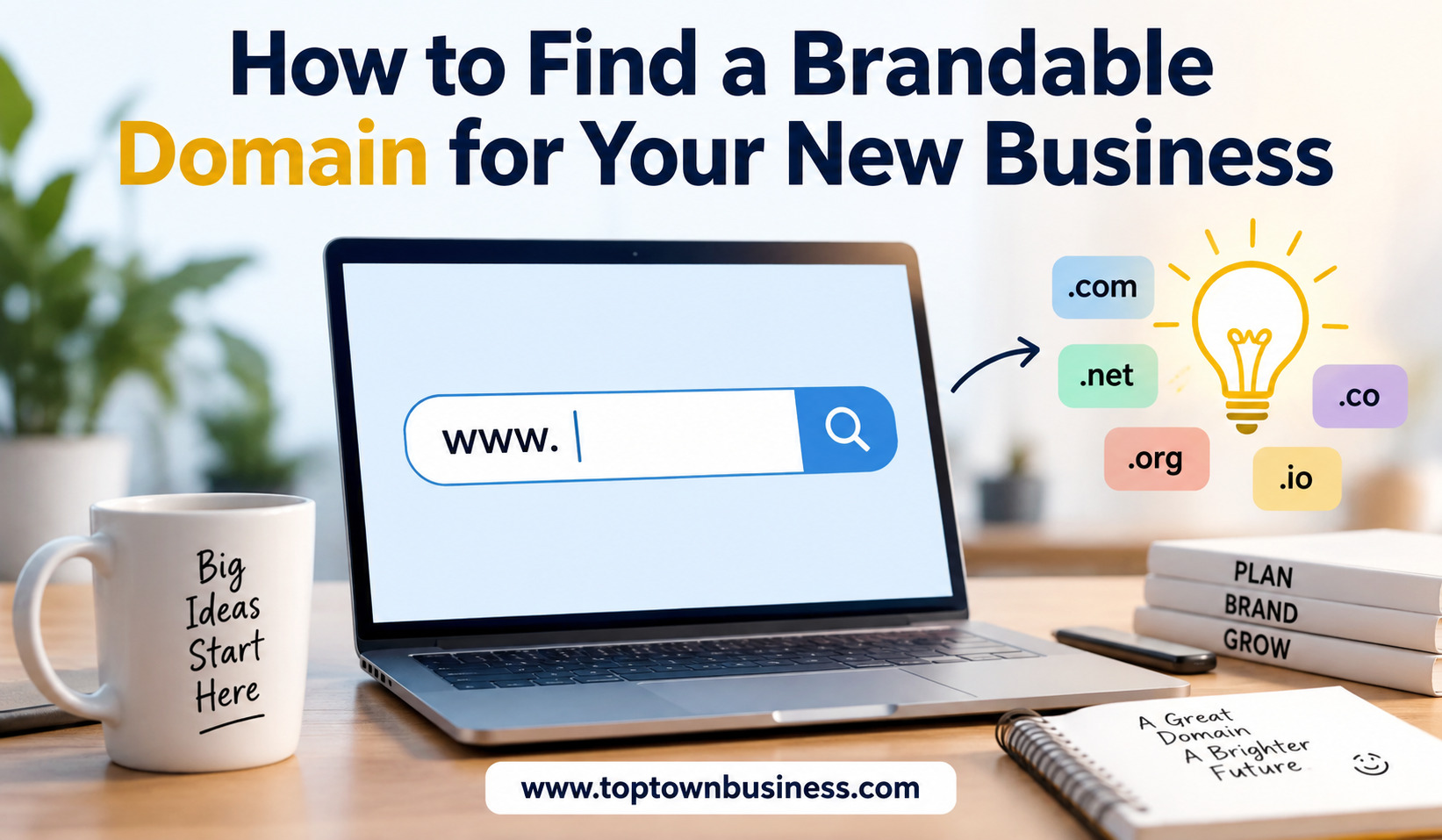
Choosing a domain name is one of the first important decisions when starting a new business. Your domain is more than just a web address. It can become part of your brand identity, influence how people remember your company, and affect how easily customers find you online.
A good domain should be simple, memorable, relevant to your business, and flexible enough to support future growth. However, finding an available domain that meets all these requirements can be challenging, especially when millions of domain names have already been registered.
The good news is that you do not need to find the perfect name immediately. With the right approach, you can create a list of strong options and choose a domain that gives your new business a professional online identity.
What Is a Brandable Domain?
A brandable domain is a web address that can be easily turned into a recognizable brand. It does not necessarily have to describe exactly what your business does.
For example, a company name can be short, distinctive, and easy to remember without containing a direct keyword related to its industry. This gives the business room to expand into new products and services later.
A brandable domain usually has a few important characteristics: it is easy to pronounce, easy to spell, memorable, and distinctive. It should also look professional when used on a website, email address, social media profile, or marketing material.
Instead of choosing a domain simply because it contains a popular keyword, think about whether customers could remember it after hearing it once.
Start With Your Brand Strategy
Before searching for domain names, define what you want your business brand to communicate.
Think about your target customers, industry, products, personality, and long-term goals. A technology startup might want a modern and innovative name, while a professional consulting company may prefer something more established and trustworthy.
Write down several words associated with your business. Include words describing your products, customers, benefits, values, and personality.
For example, a digital marketing company could explore concepts such as growth, reach, visibility, ideas, digital, media, results, and scale.
You do not necessarily need to use these words directly in the domain. They can simply help you generate creative ideas.
Keep the Domain Short and Simple
Short domains are generally easier for people to remember and type.
A complicated domain with several words, unusual spellings, or unnecessary characters can create problems. Customers may forget the spelling or type the wrong address when trying to visit your website.
For example, imagine two fictional businesses:
- BrightNest.com
- TheBestOnlineHomeDecorStore.com
The first is considerably easier to remember and communicate.
A short name does not automatically make a domain good, but simplicity can make your brand easier to build.
Try to avoid unnecessary words, complicated abbreviations, and long combinations of keywords.
Make It Easy to Pronounce
One useful test is the phone test.
Imagine telling someone your domain name during a phone call. Would they immediately understand how to spell it?
If you need to explain the spelling repeatedly, the name may not be ideal.
Avoid names that contain confusing combinations of letters, excessive abbreviations, or spellings that are difficult to guess.
A brandable domain should ideally be easy to say, hear, remember, and type.
Avoid Overusing Keywords
Many new businesses assume that putting their main keyword into the domain will automatically improve SEO.
That is not necessarily the best strategy.
Search engines use many signals to understand and rank websites. A domain name alone does not guarantee higher rankings.
Instead of creating a domain such as “bestaffordablemarketingservicesindia.com,” a business could choose a distinctive brand name that is easier to remember.
A brandable domain can also become more valuable as the business develops recognition, earns backlinks, publishes useful content, and builds customer trust.
Your SEO strategy should support your domain rather than forcing the entire SEO strategy into the domain name.
Choose the Right Domain Extension
The domain extension is the part that appears after the name, such as .com, .in, .org, or newer extensions.
For many businesses, .com remains a strong choice because it is widely recognized and easy for users to understand.
However, .com is not the only option.
If your primary audience is in India, a .in domain may make sense for your business. Other extensions can also work depending on your industry and business model.
The important thing is to choose an extension that fits your brand and does not create confusion.
If you find a great brand name but the .com version is unavailable, check whether the existing domain belongs to an active business. Using a very similar name can create branding and legal problems.
Check Social Media Availability
Your website is only one part of your digital identity.
Before finalizing a brandable domain, search for the same or a similar name on major social media platforms. You do not necessarily need an identical username everywhere, but having a consistent brand identity can make marketing easier.
For example, if your domain is ExampleBrand.com, but another company already has a strong presence using the same name on social platforms, customers could become confused.
Search the proposed business name on social media, marketplaces, and search engines before making your final decision.
Check for Trademark Conflicts
This is one of the most important steps when choosing a business domain.
A domain being available does not mean that the name is legally safe to use.
Someone else may already have trademark rights to a similar brand name. If you build your business around that name and later discover a conflict, changing your company name and domain could be expensive.
Before registering your domain, search relevant trademark databases and check businesses operating in your industry and target markets.
If you are serious about building a long-term company around the name, consider getting professional legal advice before making the final decision.
Avoid Hyphens and Numbers When Possible
Hyphens and numbers can sometimes be useful, but they often make domains harder to communicate.
Consider telling someone your website is:
brand-name24.com
They may wonder whether the domain uses the number “24,” the word “twenty-four,” or something else.
Similarly, a domain containing several hyphens can be difficult to remember and type.
If possible, choose a clean version that does not require users to remember additional symbols or numbers.
Think About Future Business Growth
Do not choose a domain that limits your business unnecessarily.
Suppose you initially sell one specific type of product. You might be tempted to include that product in your domain. But what happens if you expand into other categories later?
A broader brandable name can provide greater flexibility.
For example, a business that starts by selling handmade candles might eventually sell home décor, gifts, fragrances, and accessories. A name focused exclusively on candles could become restrictive.
Think beyond your first product and consider where you want the business to be several years from now.
Generate Many Domain Ideas
Do not stop after creating one or two names.
Create a list of at least 20–30 possibilities. Experiment with different combinations, invented words, descriptive terms, and brand concepts.
You can combine relevant words, shorten phrases, modify existing words, or create completely new names.
For example, if your business focuses on finance and technology, you might explore combinations around ideas such as wealth, smart, capital, finance, digital, growth, and future.
Once you have a large list, eliminate names that are difficult to pronounce, too long, confusing, legally risky, or difficult to spell.
This process usually makes the strongest options easier to identify.
Test Your Favorite Domain Names
Before registering a domain, test your shortlist with other people.
Ask friends, colleagues, or potential customers questions such as:
- What do you think this business does?
- How would you spell this name?
- Can you remember the name after a few minutes?
- Does the name sound professional?
- What kind of company does the name make you imagine?
Their reactions can reveal problems you may not notice yourself.
Also say the domain out loud several times. Look at it without spaces and check whether the combination of words creates an unintended meaning.
Check the Domain’s History
If you are considering a previously registered domain, investigate its history before purchasing it.
A domain may have been used by another website in the past. It could have accumulated spam, poor-quality backlinks, copyright problems, or other issues.
A previously used domain is not automatically bad, but its history deserves attention.
If you are buying a premium or previously owned domain, research its past ownership, website content, backlink profile, and reputation before investing heavily in it.
Don’t Wait Too Long Once You Find the Right Name
Domain names can be registered by anyone when they are available. A name you like today may not be available tomorrow.
After completing your basic brand, trademark, and availability checks, register the domain if you are confident about your choice.
It is also worth registering common variations that could prevent confusion, particularly if your business is expected to grow significantly.
However, avoid buying dozens of unnecessary domains without a clear reason. Focus on protecting the main brand first.
Final Thoughts
Finding a brandable domain for your new business requires more than searching for an available web address. The best domain should work as part of your overall brand strategy.
Look for a name that is short, memorable, easy to pronounce, simple to spell, and flexible enough for future growth. Check the domain extension, social media availability, search results, and potential trademark conflicts before making your decision.
Most importantly, think about the customer. If someone hears your business name once, can they remember it? Can they type it correctly? Does it sound like a company they would trust?
A strong domain will not build a successful business by itself, but it can give your company a memorable foundation for its website, marketing, SEO, social media presence, and long-term brand growth.