
Introduction
Starting an online store is an attractive option for entrepreneurs who want to sell products without the expense of opening a traditional retail shop. However, launching an e-commerce business still requires careful planning, even when you have limited money to invest. From choosing products to managing payments and attracting customers, every decision can affect your startup costs and future profitability.
The good news is that you do not need a large warehouse, an expensive website, or a full marketing team to begin selling online. You can start with a focused product range, use affordable e-commerce tools, and expand your operations as your business gains customers.
Learning how to start an online store with a limited budget involves identifying a viable product, understanding your target audience, calculating costs, and choosing a selling method that fits your resources. It also requires planning for packaging, shipping, customer service, and marketing.
For example, an entrepreneur selling handmade accessories might begin with a small inventory and a simple online storefront. Another business owner might test demand through an established marketplace before investing in a standalone website.
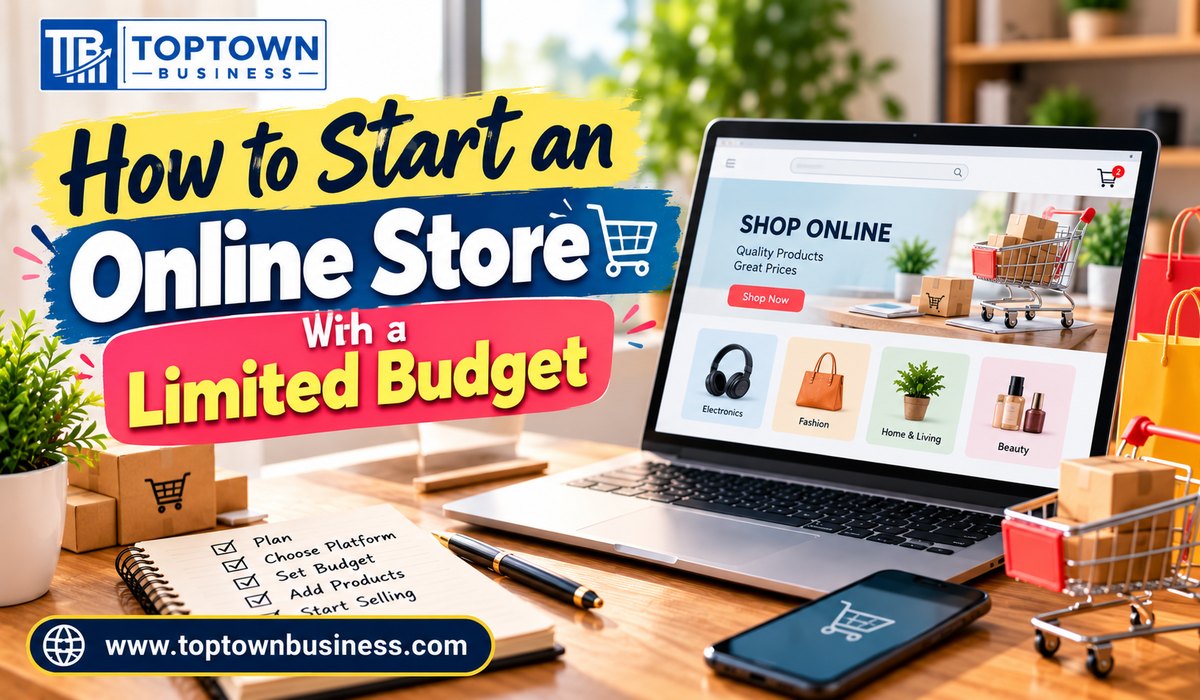
The right approach depends on your products, available funds, and business goals. This guide explains how to launch an online store affordably, avoid common mistakes, and build a foundation for sustainable growth.
1. Choose a Product With Real Market Demand
Your product choice influences nearly every part of your online business. It affects purchasing costs, shipping requirements, competition, marketing expenses, and the profit you can earn from each order.
Therefore, avoid purchasing large quantities of products before confirming that potential customers want them.
Research Your Target Market
Begin by identifying a specific customer group and understanding its needs. Consider what problems customers experience, which products they already purchase, and what might encourage them to choose your offering.
You can research product opportunities through:
- Online marketplace listings and customer reviews.
- Search trends and keyword research tools.
- Social media discussions related to your niche.
- Competitor product ranges and pricing.
- Conversations with potential customers.
- Questions customers frequently ask in relevant communities.
For example, instead of opening a general store selling hundreds of unrelated items, you might focus on reusable kitchen products, personalized gifts, stationery, or accessories for a particular hobby.
A focused niche can make it easier to understand your audience and create relevant marketing messages. However, demand, competition, and profitability still need careful evaluation.
Start With a Small Product Range
Choose a manageable selection of products that you can source, store, describe, and deliver reliably.
Before committing significant money, consider testing demand through a small batch, a limited launch, or a suitable preorder model where you can clearly communicate delivery timelines and refund terms.
Pay attention to product quality, supplier reliability, customer feedback, and the total cost of fulfilling each order.
This approach helps you learn from real customer behaviour before expanding your inventory.
2. Create a Simple Business Plan
A business plan does not need to be lengthy or complicated. For a small online store, a short document covering your products, customers, costs, and sales strategy can provide useful direction.
Define the Essentials
Your initial plan should explain:
- What products you intend to sell.
- Who your ideal customers are.
- How your products differ from competing options.
- Where you will source or manufacture inventory.
- Which platform you will use to sell.
- How you will handle payments, delivery, and returns.
- How you will attract customers.
- How much money you can afford to invest.
Also, decide how you will measure progress. Early goals might include validating product demand, completing your first orders, or achieving a sustainable contribution margin.
Avoid setting sales targets without considering your ability to fulfil orders and manage cash flow.
A simple plan allows you to make decisions systematically while remaining flexible as you learn more about the market.
3. Set a Realistic Startup Budget
A limited budget makes financial planning especially important. Small expenses can accumulate quickly when you purchase stock, packaging, website subscriptions, and marketing services.
Before launching, estimate the initial costs and the ongoing expenses required to operate your store.
Common Online Store Startup Costs
| Expense | What to consider |
| Initial inventory | Product purchases, samples, or manufacturing costs |
| Website or marketplace | Platform fees, domain registration, and subscriptions |
| Packaging | Boxes, mailers, labels, and protective materials |
| Shipping | Delivery charges, fulfilment fees, and return shipping |
| Payment processing | Transaction fees and applicable service charges |
| Marketing | Product photography, advertising, and promotional content |
| Administration | Accounting, recordkeeping, and applicable registration costs |
| Contingency | Funds for unexpected expenses and operating needs |
Your actual expenses will depend on your location, products, sales platform, and business model.
Example of a Lean Startup Budget
Suppose you have ₹30,000 available to launch a small online store in India. You could begin with an illustrative budget like this:
| Category | Example allocation |
| Initial product inventory | ₹12,000 |
| Website and setup | ₹3,000 |
| Packaging materials | ₹2,000 |
| Product photography and content | ₹2,000 |
| Initial marketing tests | ₹4,000 |
| Shipping and operating reserve | ₹4,000 |
| Unexpected expenses | ₹3,000 |
| Total | ₹30,000 |
These figures are examples, not guaranteed market prices or recommended allocations for every store. Actual website, inventory, shipping, and marketing costs can differ considerably.
You may need less money if you sell digital products or use an existing marketplace. Conversely, products requiring expensive equipment, specialized packaging, or larger minimum orders may require more capital.
Keep some money available for operating expenses rather than spending the entire budget before your first sale.
4. Choose an Affordable Selling Platform
You do not necessarily need a custom-built e-commerce website to start selling online. Several options allow entrepreneurs to launch with different levels of control, flexibility, and expense.
The best choice depends on how much technical work you can manage and whether you want to build your own brand destination.
Option A: Sell Through an Online Marketplace
Marketplaces allow sellers to list products on an existing platform. Depending on the marketplace, you may gain access to established customer traffic, payment systems, and seller tools.
This approach can be useful when you want to test demand before investing in a standalone website.
However, marketplaces may charge listing, referral, transaction, fulfilment, or other fees. They also control important aspects of the selling experience, and competition can be strong.
Read the seller terms and calculate the total fees before choosing a marketplace.
Option B: Build a Store With an E-Commerce Platform
Hosted e-commerce platforms provide tools for creating product pages, accepting orders, and managing store operations.
They can simplify setup, but subscription fees, payment charges, and optional apps may increase your ongoing costs.
Compare plans based on the features you actually need rather than paying for advanced functions before your store requires them.
Option C: Use a Self-Hosted Website
A self-hosted website can provide greater flexibility over design and functionality. However, you may need to manage hosting, updates, security, backups, and technical maintenance.
This option may suit entrepreneurs who have the necessary skills or access to affordable technical support.
How to Choose
Compare platforms using these questions:
- What are the upfront and monthly costs?
- Which transaction fees apply?
- Can customers pay using suitable methods?
- How easy is it to manage inventory and orders?
- Does the platform support your shipping requirements?
- Can you access useful sales and customer data?
- What happens if you want to move to another platform?
Start with the simplest option that supports your current business needs. You can upgrade when your sales volume or operational requirements justify the additional expense.
5. Find Reliable Suppliers and Manage Inventory Carefully
Reliable suppliers help you maintain product quality, control costs, and fulfil orders on time. Poor supplier choices can create delays, unexpected expenses, and customer complaints.
Compare Suppliers Before Ordering
Request quotations from multiple suppliers when practical. Compare more than the unit price.
Review product quality, minimum order quantities, delivery times, payment terms, return arrangements, and the supplier’s ability to maintain consistent stock.
If possible, order samples before purchasing a large quantity. A sample allows you to assess materials, finish, packaging, and other important product characteristics.
Also, calculate the landed cost of your inventory. This may include the purchase price, shipping to your business, applicable taxes, import charges, and other costs required to make the product available for sale.
Avoid Overstocking
Buying too much inventory can tie up cash that you need for marketing, packaging, and daily operations.
Instead, begin with quantities that match your budget and the evidence you have about demand. Track which products sell, which remain unsold, and how quickly suppliers can replenish popular items.
For suitable products, you might consider made-to-order production or dropshipping. However, these models have trade-offs.
Made-to-order products may require longer production times, while dropshipping can reduce your control over packaging, stock availability, and delivery. Check supplier reliability and communicate realistic delivery expectations before offering these options to customers.
6. Create Product Pages That Help Customers Buy
Your product pages should provide enough information for customers to understand what they are purchasing and decide whether it meets their needs.
Clear descriptions and useful photographs can reduce uncertainty and prevent avoidable customer complaints.
Write Accurate Product Descriptions
Include relevant details such as:
- Product features and practical benefits.
- Dimensions, weight, materials, or ingredients where applicable.
- Available sizes, colours, or variations.
- Instructions for use and care.
- What the package includes.
- Delivery estimates and return conditions.
Focus on the questions customers are likely to ask. Avoid exaggerated claims or descriptions that promise results you cannot substantiate.
Use Clear Product Images
You do not always need expensive professional photography at launch. A smartphone and suitable lighting can produce useful images for many products.
Use a clean background, show the product from relevant angles, and include close-up photographs when details matter.
Ensure that the images accurately represent the item customers will receive. For products where size or fit matters, provide appropriate measurements and reference information.
Make Buying Easy
Display the price, available options, shipping information, and purchase button clearly.
Keep navigation simple and avoid adding unnecessary steps to the checkout process. Customers should be able to understand the total cost before placing an order.
A clear buying experience can help reduce confusion and support conversions.
7. Set Up Payments, Shipping, and Returns
Customers need a convenient and trustworthy way to pay for orders. At the same time, your store must manage delivery costs and customer expectations without reducing margins unnecessarily.
Offer Suitable Payment Methods
Choose payment options that your customers commonly use and that your business can support securely.
Depending on your market and platform, these may include cards, bank transfers, digital payment methods, or cash on delivery.
Review payment processing charges, settlement timelines, refund procedures, and fraud protection features before activating a provider.
For stores operating in India, check the applicable requirements for payment processing, taxation, business registration, and consumer protection. Your obligations depend on your business structure, products, and selling arrangements.
Plan Shipping Costs
Shipping can significantly affect the profitability of low-priced products. Compare available courier services based on price, delivery coverage, tracking, reliability, and return handling.
Decide whether customers will pay shipping charges, receive free shipping above a qualifying order value, or receive shipping costs included in product prices.
Calculate the effect of each option before making a promise.
Create a Clear Return Policy
Explain the conditions for returns, exchanges, cancellations, and refunds. Make the policy easy to find before checkout.
Your policy should reflect applicable laws and platform requirements. Do not assume that every product can be excluded from returns or that every customer must pay return shipping.
Clear policies help customers understand what to expect and reduce disputes after a purchase.
8. Calculate Product Prices and Profit Margins
Selling products at a low price does not automatically make an online store competitive. If the price fails to cover the full cost of fulfilling orders, increasing sales can create financial problems rather than solve them.
Before setting prices, calculate the costs associated with each sale.
Understand Your Cost Per Order
Depending on your business, the costs may include:
- Product purchase or manufacturing cost.
- Packaging materials.
- Shipping subsidies.
- Marketplace and payment fees.
- Fulfilment costs.
- Advertising expenditure associated with acquiring the customer.
- Expected returns, replacements, or damaged items.
For example, suppose you sell a product for ₹800. The product costs ₹350, packaging costs ₹30, shipping costs ₹70, and payment and platform charges total ₹40.
Your contribution before marketing and other overheads would be:
₹800 − ₹350 − ₹30 − ₹70 − ₹40 = ₹310.
If you spend ₹150 to acquire that order through advertising, the remaining contribution falls to ₹160 before other business expenses.
This example shows why you should evaluate the full economics of each order rather than looking only at the difference between the selling price and purchase price.
Track your margins regularly and adjust pricing, sourcing, or fulfilment when costs change.
9. Market Your Online Store Without Overspending
A new store needs visibility, but you do not need to invest heavily in advertising immediately. Start with marketing activities that fit your audience and budget, then expand when you have evidence of what works.
Use Search Engine Optimization
SEO can help customers discover your store through unpaid search results.
Begin with descriptive product titles, accurate product descriptions, clear category pages, useful internal links, and a website that works well on mobile devices.
If your products answer common customer questions, publish helpful buying guides or educational articles related to your niche.
SEO takes time and does not guarantee rankings, so combine it with other relevant promotional activities.
Build a Social Media Presence
Choose platforms where your potential customers are active.
Share product demonstrations, useful tips, behind-the-scenes content, new arrivals, and answers to common questions. Focus on communicating product value rather than publishing repeated sales messages.
You can start with a manageable posting schedule and use customer feedback to improve future content.
Use Email Marketing
Invite interested visitors to subscribe to relevant updates. With appropriate permission, send product announcements, useful information, and carefully selected promotions.
Keep messages relevant and provide an easy way to unsubscribe.
Test Paid Advertising Carefully
If you have a clear product offering and a functioning checkout process, you can test a small advertising campaign.
Set a spending limit, track conversions, and compare customer acquisition costs with your contribution margins.
Avoid increasing advertising expenditure simply because a campaign receives many clicks. Focus on purchases, qualified enquiries, and other outcomes that matter to your business.
10. Provide Excellent Customer Service
Customer service can influence reviews, repeat purchases, and recommendations. For a new online store, a positive customer experience can also help establish credibility when the brand has limited recognition.
Build Trust Through Clear Communication
Respond to customer questions promptly and provide accurate information about product availability, delivery timelines, and return conditions.
When a delay occurs, inform affected customers and explain the available options.
After an order is placed, provide confirmation and tracking information where available. If a problem occurs, focus on resolving it rather than shifting responsibility.
Encourage Honest Customer Feedback
After a customer has received the product and had a reasonable opportunity to use it, invite them to share honest feedback.
Use reviews to identify product issues, improve descriptions, and understand customer preferences.
Never create fake reviews or pressure customers to provide positive ratings. Authentic feedback is more useful for building long-term trust.
You can also use common questions and complaints to improve your website, packaging, and fulfilment process.
11. Monitor Performance and Improve Gradually
Launching your online store is only the beginning. You need to review sales, costs, customer behaviour, and operational performance to understand whether the business model is working.
Track Essential E-Commerce Metrics
Conversion rate: The proportion of relevant website visitors who complete a purchase.
Average order value: The average amount customers spend per order.
Customer acquisition cost: The cost of acquiring a new customer under your chosen measurement method.
Gross profit margin: The proportion of revenue remaining after the applicable cost of goods sold.
Cart abandonment rate: The proportion of shopping carts or checkout sessions that do not result in a completed order, based on your measurement method.
Repeat purchase rate: The proportion of customers who make additional purchases during a defined period.
Return rate: The proportion of orders or products returned, measured consistently.
Review these metrics alongside cash flow and actual operating expenses. A store can generate increasing revenue while struggling financially if inventory, advertising, or fulfilment costs grow too quickly.
When you identify a problem, make a focused adjustment and observe the results. For example, if customers leave during checkout, review shipping charges, payment options, and the clarity of the total price.
Gradual improvements help you use limited resources more effectively.
Common Mistakes to Avoid When Starting an Online Store
New entrepreneurs can protect their budgets by avoiding several common mistakes.
Buying Too Much Inventory
Large initial orders can tie up cash before you understand customer demand. Begin with a manageable quantity and expand based on sales evidence.
Choosing Products Only Because They Are Trending
Popular products may also attract strong competition and price pressure. Evaluate demand, sourcing reliability, margins, and your ability to differentiate the offering.
Ignoring Hidden Costs
Packaging, shipping, transaction fees, returns, subscriptions, and marketing can reduce profits. Calculate these costs before setting prices.
Spending Too Much on Website Design
An attractive store matters, but it does not need every advanced feature at launch. Prioritize clear product information, secure checkout, mobile usability, and reliable order management.
Advertising Before Testing the Buying Process
Before spending money to attract visitors, confirm that product pages work, payments function correctly, shipping information is clear, and orders can be fulfilled.
Expanding Before the Business Is Ready
Rapid growth can create inventory shortages, delivery delays, and customer service problems. Expand only when your finances and operations can support additional orders.
Frequently Asked Questions
1. How much money do I need to start an online store?
The amount depends on your product, inventory requirements, platform fees, and fulfilment model, but a focused product range and careful spending plan can help reduce the initial investment.
2. Can I start an online store without holding inventory?
Yes, options such as dropshipping, print-on-demand, and made-to-order production can reduce upfront inventory requirements, although each model has different costs, delivery considerations, and supplier risks.
3. Which platform is best for a low-budget online store?
The best platform depends on your technical skills, product category, expected sales, and budget, so compare marketplaces, hosted e-commerce services, and self-hosted options before deciding.
4. How can I attract customers without spending much on advertising?
You can build visibility through useful SEO content, relevant social media posts, email marketing with appropriate consent, customer referrals, and genuine partnerships.
5. How long does it take for an online store to become profitable?
Profitability depends on demand, pricing, product costs, marketing efficiency, repeat purchases, and operating expenses, so monitor actual financial results rather than relying on a fixed timeline.